“The Charm was Broken”: Illness and Injury in the fairy tales of the Brothers Grimm and Mary De Morgan


From Snow White’s poisoned apple to the fabled healing power of the unicorn horn, magic and medicine often intertwine in fairy tales.  In this fascinating new exhibit, medical student and author Valerie Gribben presents original research on how the Brothers Grimm and Victorian authoress Mary De Morgan infused their fairy tales with medical themes.

The exhibit runs until May 31, 2012.  For more information, visit the Alabama Museum of the Health Sciences website.

With special thanks to Mike Flannery, Stefanie Rookis, and Peggy Balch of the Alabama Museum of the Health Sciences and Reynolds Historical Library for this exhibit.

Published in: on March 13, 2012 at 12:28 pm  Leave a Comment  

2012: Year of the Grimm?

Once Upon a Time” and “Grimm” are enchanting small screen viewers, but for fairy tales with a scholarly twist, consider this fascinating conference:

In celebration of the 200th anniversary of the publication of the tales collected by Jacob and Wilhelm Grimm, the Program in Folklore and Mythology at Harvard University will host the symposium “Grimm Legacies” February 3 and 4, 2012.  Designed by folklorist extraordinaire Maria Tatar, this conference will examine “the seemingly timeless and universal hold of the cultural stories collected by the Brothers Grimm.  Jack Zipes, Professor Emeritus at the University of Minnesota, will deliver the keynote address.”

As one of the panelists, Valerie Gribben will be speaking on “Medicine and Märchen,” looking at the surprising interconnections between fairy tales and the medical field.  For more information on this symposium, visit their homepage.

Published in: on November 16, 2011 at 3:36 pm  Comments (1)  

Harry Potter 7, Part 2: Farewell, Harry

This article originally appeared in The Birmingham News.  Read the entire article here.

With Friday’s release of “Harry Potter and The Deathly Hallows: Part 2,” the world turns the final page on a 14-year saga. Since the first book’s publication in 1997, an initially simple story has evolved into a multimedia marketing dragon, spawning everything from the standard lunchboxes and bed sheets to complex online games and academic reference tomes. Though the book series concluded in 2007, it is with this last movie that the Harry Potter Generation — my generation — bids a true farewell to The Boy Who Lived.

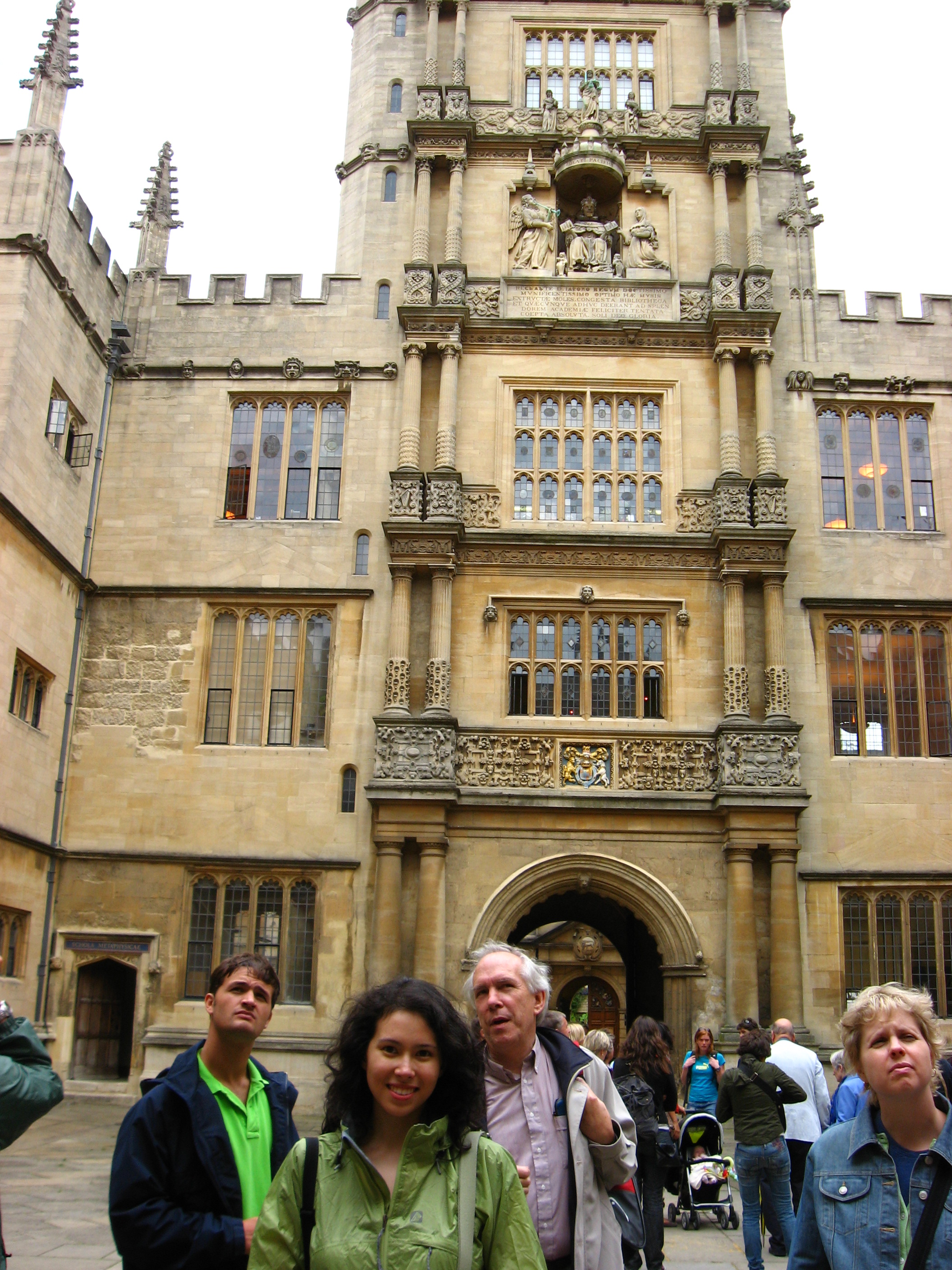
As the Harry Potter hysteria was just beginning, I read the first book over several afternoons in my local library and marveled at the fact that Harry and I were both 11 years old. In years to come, whether cramming for chemistry or preparing for the SAT, I always carved out time for the latest installment of Harry’s adventures. When Book Seven launched, I was studying abroad in Oxford, England, and I finished those poignant passages in the gardens and walkways that had stood in for Hogwarts onscreen.

The debut of each book or film became a notch on the cultural calendar of my adolescence. Admittedly, many of these memories involved waiting in a line at midnight. But it was something special for my parents to extend my bedtime and let me gather with other fans, fueled by pretzel sticks dipped in chocolate and passed off as “wizarding wands.” Postbook parties, there was the inevitable literary race through the night — for with daybreak came the risk of spoilers, vicious classmates intent on blurting out the endings. (“Snape kills Dumbledore!”) The works themselves sparked debates for months to come: What do you think of Dobby? Why does Ron keep getting injured? Will Harry die in the last book?

Unlike today’s proudly pale “Twilight” series, Harry Potter bridged gender divides; one would be hard-pressed to find teenage boys who would admit to siding with “Team Edward” or “Team Jacob” the way they had cheered for Gryffindor over Slytherin. The Potter books also crossed the rigid social barriers of school lunchroom tables; my brother and I observed that the singular phenomena of Harry Potter united both popular kids and the ones they teased. Perhaps, we speculated, on the inside, every student feels like the scrawny kid with round glasses.

As the series unfolded, subsequent novels became more layered and grimmer in tone. Harry’s early experiences focused on whimsies like Bertie Bott’s Every-Flavour Beans; by contrast, the final book opens with a quotation from Aeschylus’ The Libation Bearers (“Oh, the torment bred in the race/ the grinding scream of death …”). After the emotional shredding of Harry (and readers) via “The Half-Blood Prince,” one of my friends quipped, “If the next book gets any darker, they could film that movie by just leaving the lens cap on the camera.”

Between the publication of “The Goblet of Fire” and “The Order of the Phoenix,” my high school watched the real-world horror of 9/11. Fellow ninth-graders with whom I once speculated about the proper pronunciation of “Hermione” and the true nature of Snape’s allegiances have since seen active military duty in lands far more distant and dangerous than Malfoy Manor — displaying their bravery and sacrifice without the aid of healing potions or Time-Turners.

Some of my past Potter buddies now have their own kids who will soon be boarding the Hogwarts Express, though without the fun and fanfare of anticipating each new release. It is a testament to the creative power of author J.K. Rowling that Muggle children of the 30-second Viral Video Age prove consistently willing to read books that have the approximate heft of doorstops.

The tagline for “The Deathly Hallows: Part 2″? An ominous “It All Ends.” But for the Harry Potter Generation, our memories remain. All is well.


Published in: on July 17, 2011 at 6:31 pm  Comments (1)  

Letters to the NYT Editor

When “ER” Met “Hansel and Gretel”

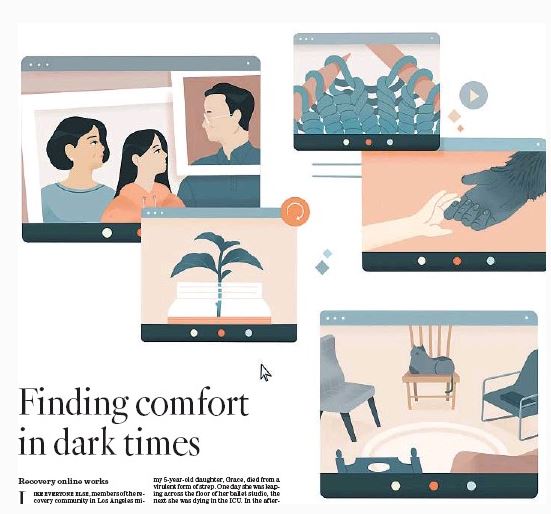
Published in The New York Times on Friday, July 8, 2011.  Original Illustration by Eleanor Davis.

Published in: on July 8, 2011 at 2:19 pm  Comments (1)  

“Practicing Medicine Can Be Grimm Work”

by Valerie Gribben

TODAY, after four arduous years of examinations, graduating medical doctors will report to their residency programs. Armed with stethoscopes and scalpels, they’re preparing to lead the charge against disease in its ravaging, chimerical forms. They carry with them the classic tomes: Harrison’s Principles of Internal Medicine and Gray’s Anatomy. But I have an unlikely addition for their mental rucksacks: “Grimm’s Fairy Tales.”

Fairy tales have always fascinated me: fishermen and talking flounder, siblings wending their way through a shadowy forest, seven brothers transformed into ravens. Although I always wanted to be a doctor and took the requisite courses to be admitted to medical school, in my undergraduate years I majored in English and studied Victorian fairy tales. Immersing myself in period documents, I saw tenuous connections between the worlds of fantasy and medicine, between fairy dust and consumption.

But when I started medical school, I packed up my youthful literary indiscretions. I reordered my bookshelf, moving my well-thumbed but now irrelevant Brothers Grimm stories behind a biochemistry textbook. Within weeks my desk was crammed with printouts on fractures of the humerus and the intermediates of oxidative phosphorylation. I was thinking in terms of proximal and distal, instead of hither and thither.

Then I started my third year of medical school, when students rotate through the different specialties, crisp white coats venturing into the grime of clinical medicine. I felt I was prepared with my color-coded pharmacology flashcards and issues of The New England Journal of Medicine.

But soon I came across an elderly woman with hyponatremia. I knew what treatment she needed. But my textbooks and articles let me down. They couldn’t tell me why her adult children had been neglecting her and denying her food. They gave no answers to the mysteries behind the physical symptoms, or how to process them.

In pediatrics, my team discovered long, thin scratches on a child’s back — made by metal clothes hangers that someone had dug into her skin and pulled.

In physical medicine and rehabilitation, we supervised occupational therapy for a 10-year-old who’d shot himself in the head. He shrugged when we asked why: “I dunno.”

In neurology, a stroke patient went off life support on his daughter’s birthday, and the sound of her convulsive weeping went up and down the hallways, knocking against other patients’ doors.

In internal medicine, I cared for a woman who had been so badly beaten by her late husband that her eyes pointed in different directions. She came in for trouble swallowing, and I had to hold her down during an endoscopy to see if esophageal cancer was the cause.

In surgery, a handsome young man was being eaten alive by cancer. From above the operating table, I could peer inside him and see tumors wrapping themselves around his vital organs.

In psychiatry, a waifish princess look-alike — mascara dripping down her porcelain cheekbones — was committed to our ward for hearing voices not of this world.

The practice of medicine bestows the sacred privilege to ask about the unmentionable. But what happens when the door to Bluebeard’s horror chamber opens, and the bloody secrets spill onto your aseptic field of study? How do you process the pain of your patients?

I found my way back to stories. The Grimm fairy tales once seemed as if they took place in lands far, far away, but I see them now in my everyday hospital rotations. I’ve met the eternal cast of characters. I’ve taken down their histories (the abandoned prince, the barren couple) or seen their handiwork (the evil stepmother, the lecherous king).

Fairy tales are, at their core, heightened portrayals of human nature, revealing, as the glare of injury and illness does, the underbelly of mankind. Both fairy tales and medical charts chronicle the bizarre, the unfair, the tragic. And the terrifying things that go bump in the night are what doctors treat at 3 a.m. in emergency rooms.

So I now find comfort in fairy tales. They remind me that happy endings are possible. With a few days of rest and proper medication, the bewildered princess left relaxed and smiling, with a set of goals and a new job in sight. The endoscopy on my cross-eyed confidante showed she was cancer-free.

They also remind me that what I’m seeing now has come before. Child endangerment is not an invention of the Facebook age. Elder neglect didn’t arrive with Gen X. And discharge summaries are not always happy; “Cinderella” originally ended with a blinding, and Death, in his tattered shroud, waits at the end of many journeys.

Healing, I’m learning, begins with kindness, and most fairy tales teach us to show kindness wherever we can, to the stooped little beggar and the highest nobleman. In another year, I’ll be among the new doctors reporting to residency training. And the Brothers Grimm will be with me.

Read the entire article from the New York Times.  Learn more about The Fairytale Trilogy here 

Published in: on July 1, 2011 at 6:48 am  Comments (4)  

William and Kate’s Fairy Tale Royal Wedding

I happened to be in London in April 2011 doing research for medical school.  But what’s a girl to do when the library is closed?  Attend the Royal Wedding, of course!

Published in: on June 29, 2011 at 3:11 pm  Comments (1)  

Interview with Valerie Gribben, author of The Fairytale Trilogy

Covering everything from eBooks to med school, Danny Salter interviews Valerie Gribben about The Fairytale Trilogy. Watch the video on YouTube.


Published in: on May 4, 2011 at 5:08 pm  Leave a Comment  

New Review from YA Reader

The Fairytale Trilogy was an amazing set of stories. These stories had many wonderful and intriguing qualities, and I would recommend them to anyone who loves fairytales and wants something a little different.”–KjOls, Age 11, Flamingnet New Book Reviews

Published in: on April 14, 2011 at 4:48 pm  Leave a Comment  

The Fairytale Trilogy: Best-seller of the Week

According to The Birmingham News, The Fairytale Trilogy was the #1 Best-Seller at The Little Professor Book Store for the first week of March 2011.  A big thanks to all the friends of the Fairytale Trilogy!

Published in: on March 9, 2011 at 7:37 pm  Leave a Comment  

Welcome to the World of The Fairytale Trilogy

Published in: on February 28, 2011 at 7:22 pm  Comments Off  
Follow

Get every new post delivered to your Inbox.